
Medicare Lead vs Appointment: What Agents Need to Know
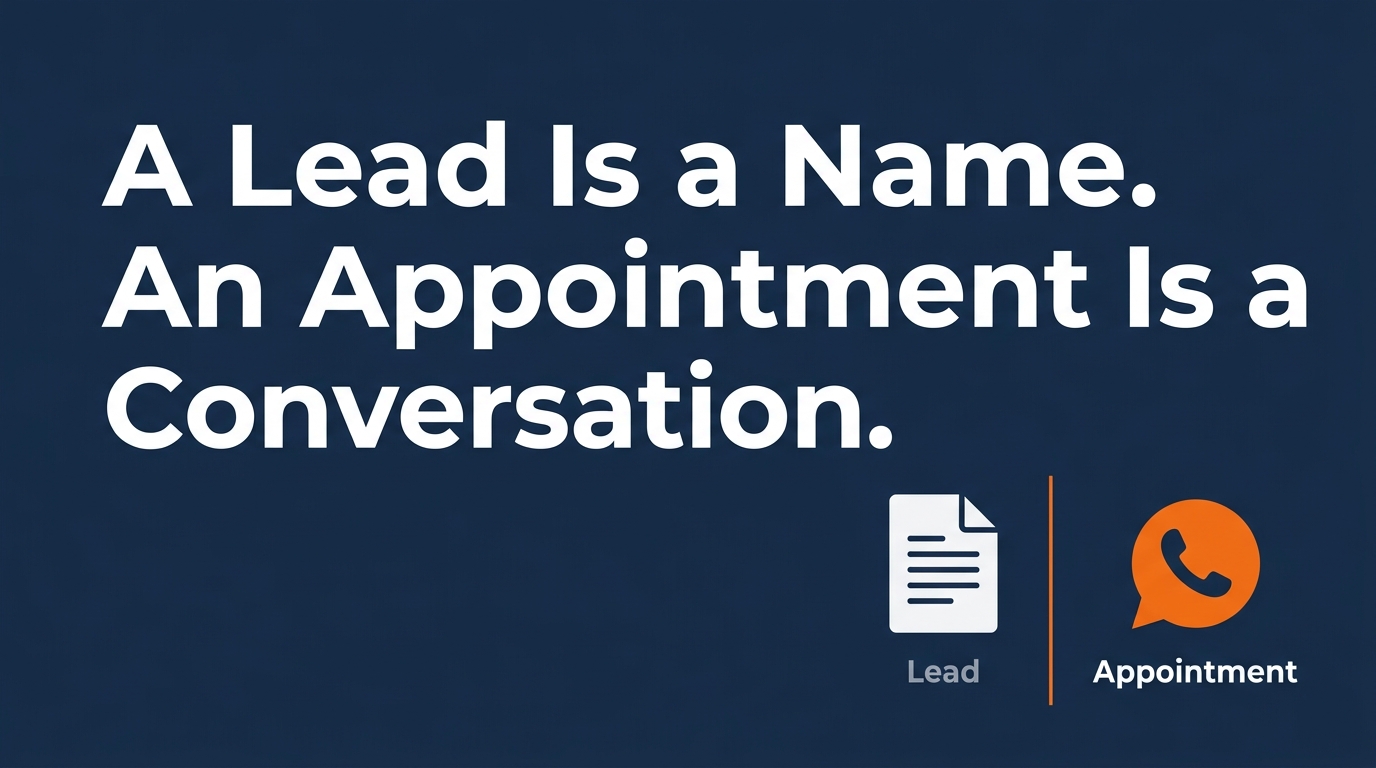
What a Medicare Lead Actually Is
A Medicare lead is contact information for someone who expressed some level of interest in Medicare coverage. That is the complete definition. What that interest looked like varies significantly.
Sometimes the prospect filled out a form specifically about Medicare plans. Sometimes they clicked a banner ad. Sometimes they entered a sweepstakes that mentioned Medicare somewhere in the fine print. The lead vendor groups all of these together and sells the list at the same price.
The Shared Lead Problem
Most leads are sold to 3 to 5 different agents simultaneously. The moment you receive that name and number, so does your competition. The race to the phone starts immediately.
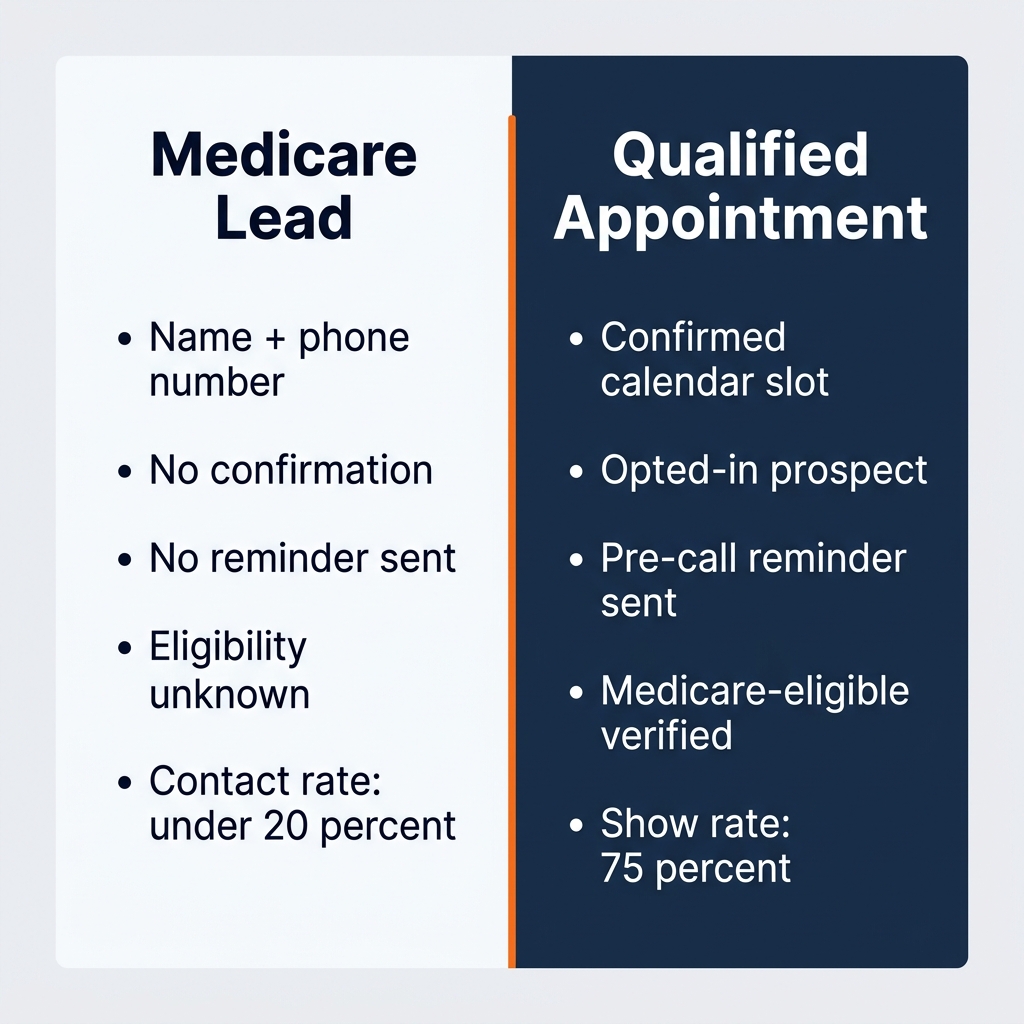
Contact rates on shared leads typically run below 20%. Many agents report reaching fewer than 1 in 10. You are not just competing with the clock. You are competing with four other agents for a prospect who may not remember filling out the form at all.
The Exclusive Lead Problem
Exclusive leads, sold to one agent only, solve the competition problem. But they do not solve the fundamental issue. The prospect still has not agreed to talk. They have not confirmed a time. They have not been reminded of anything.
You still have to convert a name and phone number into a conversation. That conversion takes time, follow-up calls, and persistence, and none of that cost appears on the lead invoice.
What a Qualified Medicare Appointment Actually Is
A qualified Medicare appointment is something entirely different from a lead. It starts where a lead ends, after the prospecting work is already done.
A qualified appointment is a confirmed time slot on your calendar with a Medicare-eligible prospect who opted in, agreed to the call, received a confirmation, and was reminded before the meeting. They showed up. They spoke with you for at least 10 minutes. And they expressed genuine interest in their coverage options.
The 5-Part Medicare Lead vs Appointment Definition
A qualified Medicare appointment requires all five of the following. If any component is missing, it is not a qualified appointment.
- Medicare-eligible: 65 or older, or qualifying due to disability or ESRD
- Confirmed: the prospect agreed to a specific time on your calendar
- Showed up: they were present for the call, not a no-show
- 10 minutes minimum: the conversation lasted long enough to assess real interest
- Genuine interest: the prospect expressed actual interest in their coverage options
A raw lead meets zero of these criteria. A qualified appointment meets all five.
The Medicare Lead vs Appointment Cost Comparison
The cost difference looks obvious on the surface. Leads cost less per unit. Appointments cost more. But that math only shows half the picture.
At a ~$35 cost per lead with a 22% lead-to-book rate, each booked appointment costs approximately $159. At a 75% show rate, each conversation that actually takes place costs around $212.
Now think about raw leads. You pay per lead. Then you invest time in 5 to 10 dials to reach each one. Then you persuade them to schedule a call. Then you remind them. Then some do not show up. Each step adds real cost that does not appear on the cost-per-lead invoice.
The booked appointment model bundles all of that conversion work into one number. The raw lead model hides most of the true cost.
Why This Medicare Lead vs Appointment Gap Matters for Your Income
When you work confirmed appointments instead of raw leads, three things change.
Your time shifts to selling, not prospecting. You are not dialing 50 names to reach 8 people. You are showing up to confirmed calls.
Your show rate improves. Prospects who opted in, confirmed a time, and received a reminder show up at a much higher rate than cold contacts.
Your close rate improves. Someone who agreed to the meeting and showed up is in a fundamentally different mindset.
One enrolled Medicare Advantage client pays $611 in Year 1. Over five years, that same client is worth $1,500 to $2,000 in commissions.
How to Evaluate Any Service Using This Distinction
Before paying any agency or lead vendor, ask these three questions.
What exactly am I receiving? Raw leads or confirmed, booked appointments? Ask them to define it precisely.
What is the guarantee? A guarantee on raw leads is not the same as a guarantee on booked appointments.
What happens if the target is not met? If the vendor cannot answer this clearly, you are buying leads, not appointments.
The Medicare Lead vs Appointment Gap Is Where Most Agents Lose Money
If you are spending money on leads but not tracking your cost per booked appointment, you do not know what your pipeline actually costs.
The difference between a Medicare lead and a qualified appointment is not a semantic one. It is the difference between a list of strangers and a calendar full of real conversations.
Not sure which part of your pipeline is leaking?
Take the free 60-second assessment and get your personalized Medicare Lead Gen Roadmap. It shows you where you are spending money and where the real conversion gaps are. Free, no pitch.
[Get Your Free Medicare Lead Gen Roadmap -> https://sixtyfive-leads.lovable.app/roadmap]
Or if you are ready to talk through what booked appointments could look like for your market, book a free 20-minute strategy call. No pitch. Just a look at your numbers. [https://api.leadconnectorhq.com/widget/bookings/dylan-conner-personal-calendar-60hhrscqv]
Frequently Asked Questions
Q: What is the difference between a Medicare lead and a qualified appointment? A: A Medicare lead is contact information for someone who expressed some level of interest in Medicare coverage. A qualified Medicare appointment is a confirmed, showed-up call with a Medicare-eligible prospect who opted in, confirmed a time, received a reminder, and spoke with the agent for at least 10 minutes. A lead is a starting point. A qualified appointment is a completed conversation.
Q: What makes a Medicare appointment "qualified"? A: A qualified Medicare appointment meets five criteria: the prospect is Medicare-eligible (65 or older, or qualifying disability or ESRD), they confirmed a specific time, they showed up to the call, the conversation lasted at least 10 minutes, and they expressed genuine interest in their coverage options.
Q: Are booked Medicare appointments worth more than raw leads? A: For most agents, yes. A raw lead requires contact attempts, follow-up, and persuasion just to get a conversation started. A booked appointment starts at the conversation stage. The cost per enrolled client is significantly lower when you factor in all the conversion work a raw lead requires.
Q: How do I know if a Medicare lead gen service delivers leads or appointments? A: Ask for a clear definition of their deliverable. True booked appointments include opt-in confirmation, calendar booking, pre-call reminder, and a show-up requirement. If the agency cannot define their product at that level of specificity, they are selling leads, not appointments.