
Annuity Appointment Setting for Advisors: Real Costs
Annuity appointment setting for advisors is priced all over the map right now. One advisor pays $10 for a lead. Another pays $385. A third spends $8,000 on a dinner event and counts the night as a win.
None of those numbers tell you anything on their own. Here is what they actually mean.
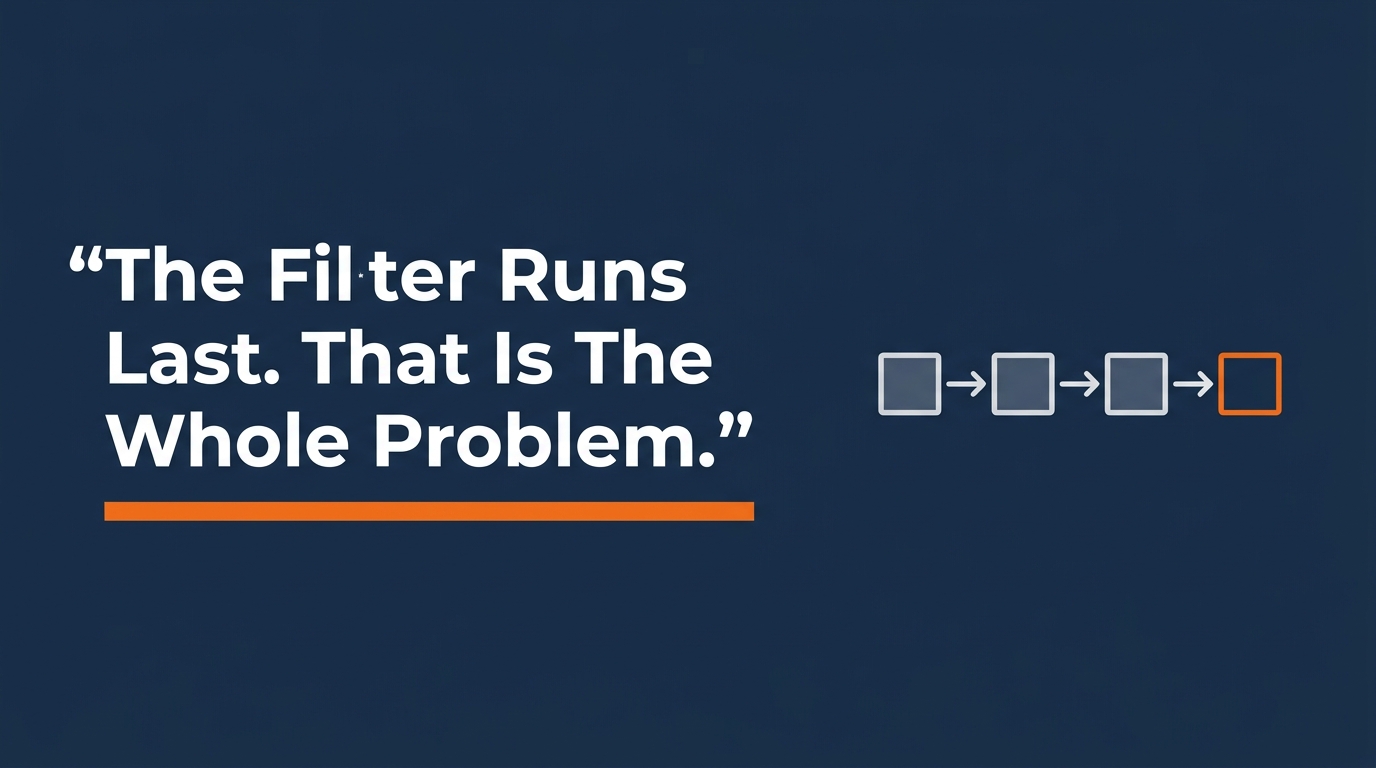
What Annuity Appointment Setting for Advisors Costs Today
Published market pricing gives you a real range to work from.
Aged annuity leads start around $10 each. Exclusive real time leads run about $100 to $125, and some vendors price exclusive annuity leads at $275. One lead source quotes $385 for tightly targeted annuity leads. Exclusive leads generally cost three to five times what shared leads cost.
Seminars sit in a different bracket. Advisors typically spend $3,000 to $16,000 per event. A common breakdown is roughly $5,000 for the mailing and $2,000 for the dinner, plus the venue and your evening. Some trainers argue you can run one for about $2,500.
On paid social, one published advisor case study reported roughly $233 per annuity appointment.
So the honest answer to "what does this cost" is a range spanning more than a factor of thirty. That is why the number by itself is useless.
A $10 lead and a $385 lead are not the same product. One is a name resold for months. The other is a person who raised a hand this week. Comparing them on price is like comparing a used tire to a new one by weight.
Why Cost Per Lead Is the Wrong Number
Cost per lead is the number every vendor leads with. It is also the number that hides the most.
A lead is not a conversation. A conversation is not an appointment. An appointment is not a person with money that can move.
Each of those steps has a survival rate. Cost per lead ignores all of them.
The Formula That Replaces It
Use this instead. It takes two minutes and your own numbers.
Cost per annuity appointment = total channel spend ÷ appointments that showed up with assets you can actually work.
Not leads. Not bookings. Not attendees. Appointments that showed, with money that can move.
Run it on every channel you used last quarter. Most advisors have never calculated their true cost per annuity appointment, and most are surprised by which channel wins.
Where Most Advisors Stop Counting
Three costs almost never make it into the math.
The first is your time. An evening presenting is an evening. Put a number on it or you are not measuring the channel, you are measuring the invoice.
The second is the callback pile. A prospect whose money sits inside a surrender period two years out is not an appointment. It is a follow up task. Counting it as an appointment flatters the number.
The third is the appointments that never show. Show rate is a cost, not a footnote.
The Four Ways Advisors Buy Annuity Appointments
Every method in this market is one of four things.
Seminars and Dinner Events
You mail a few thousand households. Some respond. You rent a room, buy dinner, and present. Then you find out at the table who has assets.
The cost is real and it is front loaded. The mail, the venue and the food are spent before you learn anything about anyone.
Shared Annuity Leads
Somebody downloads a retirement guide. That name gets sold to several producers. The prospect takes several calls in two days and stops answering.
This is why exclusive leads carry a three to five times price premium. You are paying for the absence of four other advisors.
Exclusive Annuity Leads
Better, and priced accordingly at roughly $100 to $275 depending on the source. Exclusive fixes the competition problem. It does not fix the qualification problem.
An exclusive lead can still be a person with no investable assets. Exclusivity says nobody else called. It says nothing about whether the call is worth making.
Paid Social and Digital
The most controllable of the four, and where the published cost per annuity appointment benchmarks are lowest. It is also the one most advisors have run badly at least once.
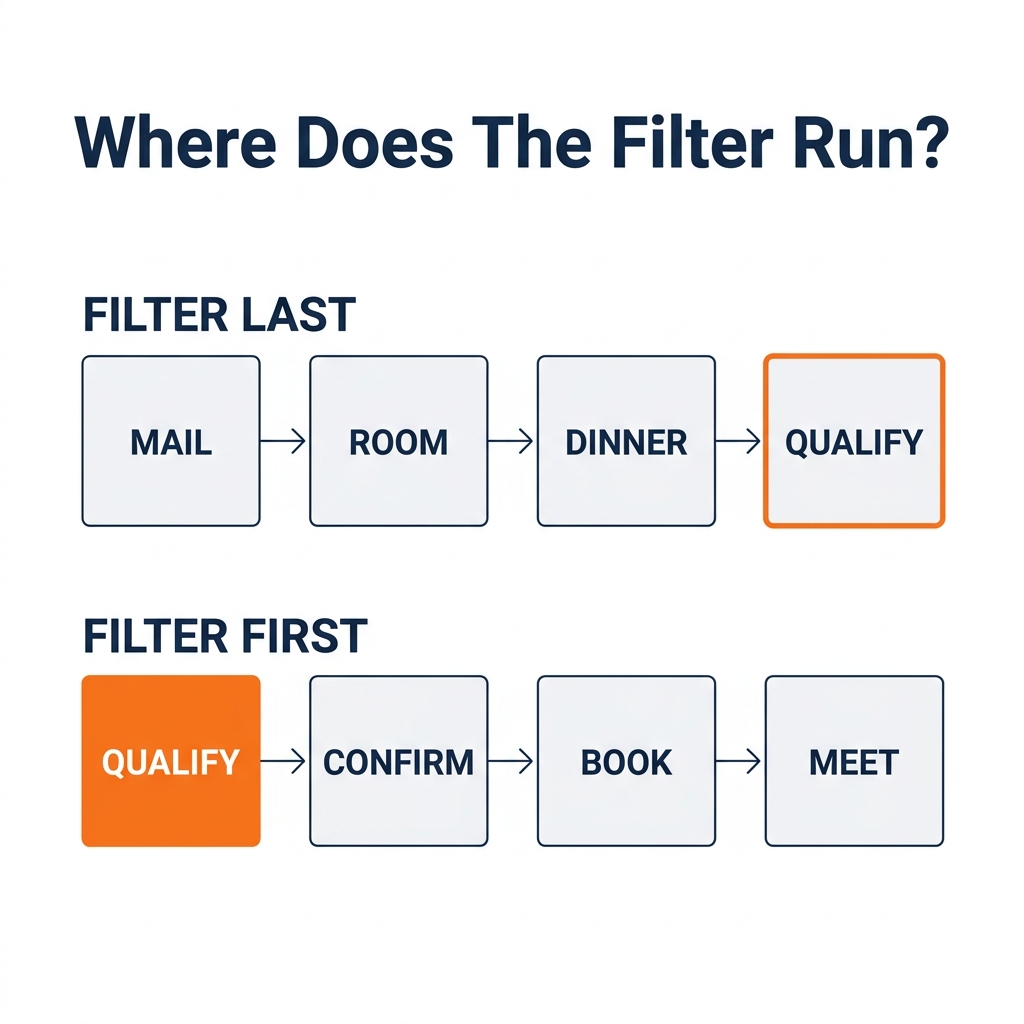
Every Channel Has the Same Structural Flaw
Here is the pattern underneath all four.
The filter runs last.
You mail before you know who has money. You buy the lead before you know who has money. You rent the room, buy the dinner and give up the evening before you know who has money.
The spend happens first. The qualification happens at the end. That is structural. It is not a matter of running the seminar better or buying a slightly better list.
Move the filter to the front and the arithmetic changes on every channel at once. That is the whole mechanism. Everything else in annuity appointment setting for advisors is a detail.
What "Qualified" Should Mean in Annuity Appointment Setting
Most vendors qualify on age and zip code. That is demographics, not qualification.
A qualified annuity appointment should clear three bars before it reaches your calendar.
Investable Means Investable
Not the house. Not the equity in the house. Not what they think the business is worth.
Money that can actually move. Our own gate is $250,000 to $1,000,000 in investable retirement assets, self reported by the prospect.
Confirmed Twice
Once in the funnel, once by a person on the phone. Self reported and confirmed is not the same thing as verified, and any vendor telling you they verified a stranger's balance sheet over the phone is overselling it.
Say what you actually do. Confirmed twice is honest. Verified is not.
Money That Can Move Now
Qualified money sitting inside a surrender period is a callback, not an appointment. Booking it as one is how a vendor makes their delivery numbers look better than your calendar feels.
That is the third bar, and it is the one most vendors skip.
How Vendors Price This, and Why It Changes Your Number
Once the filter is in the right place, one question is left. How is the work priced.
Two structures exist in this market.
Some vendors charge per appointment and fund the advertising themselves. It is predictable and easy to budget. It also means your price per appointment never improves, no matter how much volume you do.
Others charge a flat fee to build and run the system, while you fund the advertising directly on your own card. The fee is fixed, so your cost per annuity appointment falls as your spend rises.
Neither is automatically better. They price different risks.
What matters more than the structure is whether you can see the media spend separately from the fee. If a vendor blends them into one number, you cannot calculate your cost per annuity appointment at all. That is where this article started, and it is the question to press on.
The 24/7 Rollover Pipeline is built on exactly this. We build the ads, the funnel, the asset qualification and the CRM inside your own accounts, then run all of it. Your ad account, your card, your pixel, your audiences. If we ever stop working together, you keep a working system instead of an invoice history.
Start With Your Own Cost Per Annuity Appointment
You do not need a vendor to start. You need last quarter's spend and an honest count of appointments that showed with money that could move.
Run the division. Compare it to the published ranges above. Annuity appointment setting for advisors only gets rational once you know your own real number.
This article is written for licensed insurance and financial professionals. It is not a solicitation to consumers and it is not financial advice.
Want to know if a filter first pipeline fits your practice?
The first two minutes of the call are one question: what is your average case size. If it is under $300,000, I will tell you not to buy this. If it is above, we will map what a pipeline in your territory looks like.
One advisor per territory.
Frequently Asked Questions
How much does an annuity appointment cost?
It depends on the channel and how you count. Published market data puts aged annuity leads near $10, exclusive real time leads at roughly $100 to $275, and one targeted source at $385. Seminars run $3,000 to $16,000 per event. One published advisor case study reported about $233 per annuity appointment on paid social. The useful number is not any of those, it is your own total channel spend divided by appointments that showed with workable assets.
Are annuity seminars still worth it for advisors?
They still work for advisors who can absorb the front loaded cost and fill a room consistently. The structural weakness is that the mailing, the venue and the dinner are all paid for before you learn who has investable assets. If your cost per qualified appointment from seminars is higher than your other channels, that is the reason.
What makes an annuity appointment qualified?
Age and zip code are not qualification. A qualified annuity appointment means the prospect has confirmed investable assets, meaning money that can actually move rather than home equity or a business valuation, and that the money is not locked inside a surrender period. Assets should be self reported and then confirmed by a person, not claimed as verified.
Are exclusive annuity leads better than shared leads?
Exclusive leads solve the competition problem, which is why they carry a three to five times price premium over shared leads. They do not solve the qualification problem. An exclusive lead with no investable assets is still a wasted hour, so exclusivity is worth paying for only when asset qualification sits in front of it.