
Exclusive Medicare Leads vs. Shared Leads: Contact Rate Data
Want to see what your pipeline would look like with 25 exclusive T-65 leads delivered this month?
Take the free 60-second assessment and get your personalized Medicare Lead Gen Roadmap. It benchmarks your current lead quality setup and shows you exactly where the gaps are — free, no pitch.
Get Your Free Medicare Lead Gen Roadmap
Or if you are ready to talk through what exclusive leads would look like for your specific market, book a free 20-minute strategy call. No pitch. Just a look at your numbers.
Frequently Asked Questions About Exclusive Medicare Leads
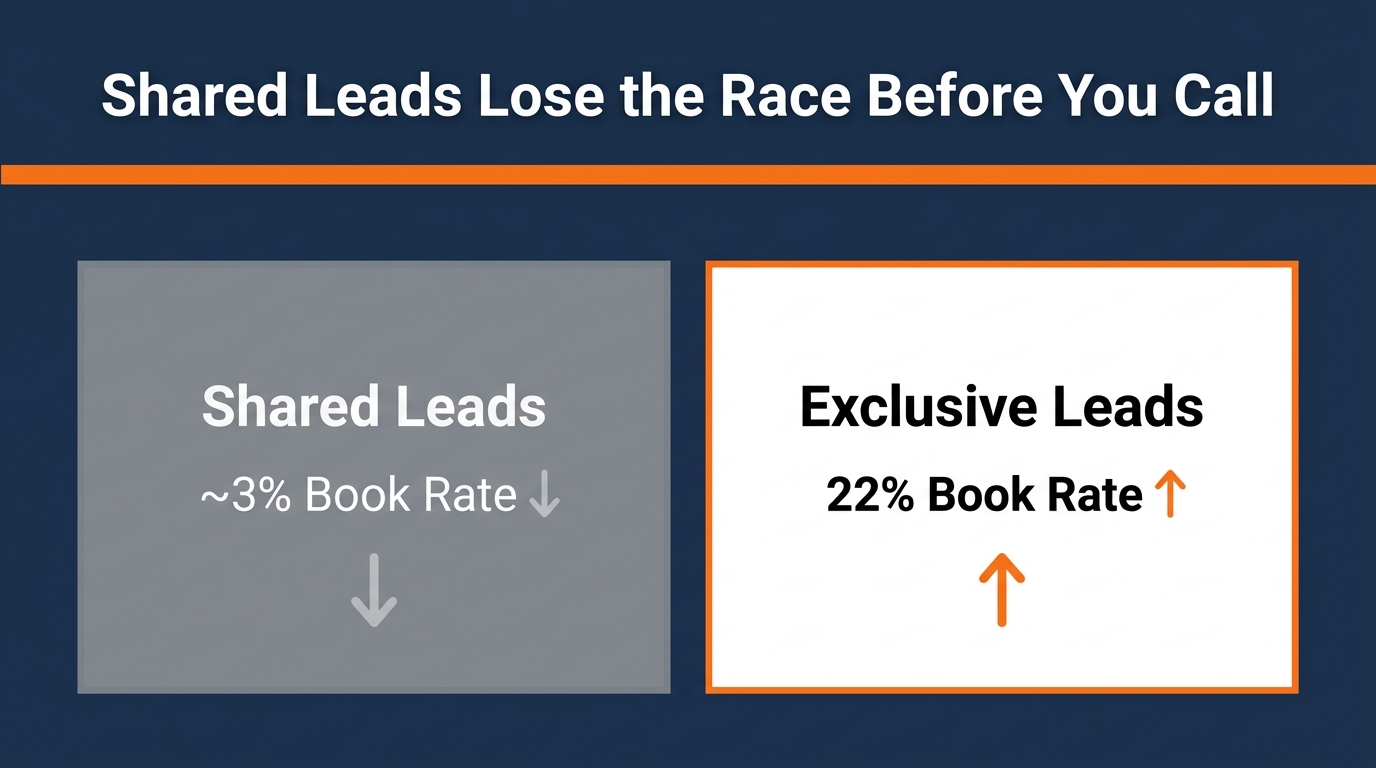
Q: What is the contact rate for shared Medicare leads? A: Industry data shows shared Medicare leads convert to booked appointments at roughly 3%. This low rate reflects the fact that multiple agents receive the same lead simultaneously, creating competition and reducing the quality of each interaction. Exclusive leads with intent verification book at significantly higher rates — 22% or more when combined with real-time delivery and SMS verification.
Q: How many agents typically receive the same shared Medicare lead? A: The number varies by vendor, but shared Medicare leads are commonly distributed to 5 to 10 agents at the same time. Some vendors allow more. This simultaneous distribution is the core reason shared lead contact rates are so low — by the time most agents call, the prospect has already been contacted by competitors.
Q: Are exclusive Medicare leads worth the higher cost per record? A: When measured by cost per booked appointment rather than cost per lead, exclusive Medicare leads are often less expensive than shared leads. A 22% book rate on exclusive leads versus a 3% rate on shared leads means you need more than 7 times as many shared leads to get the same number of appointments — which makes the total spend much higher even if the per-lead price is lower.
Q: What is SMS verification and why does it matter for Medicare leads? A: SMS verification is a step in the lead generation process where the prospect actively confirms their interest via text before their information is sent to an agent. It is an intent signal that improves both contact rate and show rate — prospects who verified intent are more likely to remember their inquiry, answer your call, and show up to the appointment.