
Medicare Facebook Ads Results: Why Most Agents Fail
Why Medicare Facebook Ads Fail for Most Agents
The failure pattern is predictable. An agent sets up a Facebook ad, picks an audience, writes a hook, and waits. The leads either do not come in or they come in and never answer the phone.
There are three reasons this happens.
Mistake 1: The Wrong Hook
Most Medicare Facebook ads lead with the product. "Get your free Medicare plan comparison." "See if you qualify for a $0 premium plan." "Compare Medicare Advantage plans in your area."
These hooks fail for two reasons. First, they attract beneficiary-style clicks, not agent-quality leads. Second, they sound like every other Medicare ad on the platform. Prospects who have seen 10 of these in a week scroll past without stopping.
The hooks that work open with the prospect's situation, not your offer. "Turning 65 this year? Here is what most people get wrong about Medicare timing." "Your Medicare window is shorter than you think." These create curiosity before they ask for anything.
The difference between a $35 CPL and a $90 CPL is usually the hook.
Mistake 2: No Follow-Up System Behind the Ad
An ad can generate a lead in 30 seconds. Most agents take 24 to 48 hours to follow up. By then, the prospect has either forgotten filling out the form, enrolled somewhere else, or stopped answering calls from unknown numbers.
A Medicare lead that comes in at 2 PM on a Tuesday needs a text within 5 minutes. Then an email. Then a voicemail if no response. Without a GHL pipeline running that sequence automatically, the ad spend is wasted before any human ever makes contact.
Most DIY Medicare Facebook ads results look bad not because the leads are low quality. They look bad because the follow-up does not exist.
Mistake 3: Misunderstanding Meta's Advertising Rules
Insurance falls under Meta's Special Ads Category, which restricts age targeting, ZIP-code-level geographic targeting, and certain interest audiences.
Agents who set up campaigns without accounting for this either have their ads rejected outright or run broad audiences that generate unqualified traffic. Either way, the Medicare Facebook ads results suffer.
The fix is building campaigns within the Special Ads Category rules -- using interest-based signals, first-party audience data, and the right geographic radius settings. This requires knowing the rules before you build, not after your account gets flagged.
What Good Medicare Facebook Ads Results Actually Look Like
The benchmark numbers for a well-run Medicare Facebook campaign are specific and repeatable.
At a target CPL of around $35, a 22% lead-to-book rate puts cost per booked appointment around $159. A 75% show rate keeps cost per showed appointment around $212.
These are not outlier numbers from one lucky campaign. They reflect what consistent, properly built Medicare Facebook ads deliver when the campaign structure, hook, and follow-up system are aligned.
We published a detailed breakdown of what one such campaign looked like in practice -- 28 appointments booked in 78 days. You can see that post here: 28 Medicare Appointments in 78 Days.
The common factor in all these results is the system behind the ad. The ad brings in the lead. The pipeline converts it.
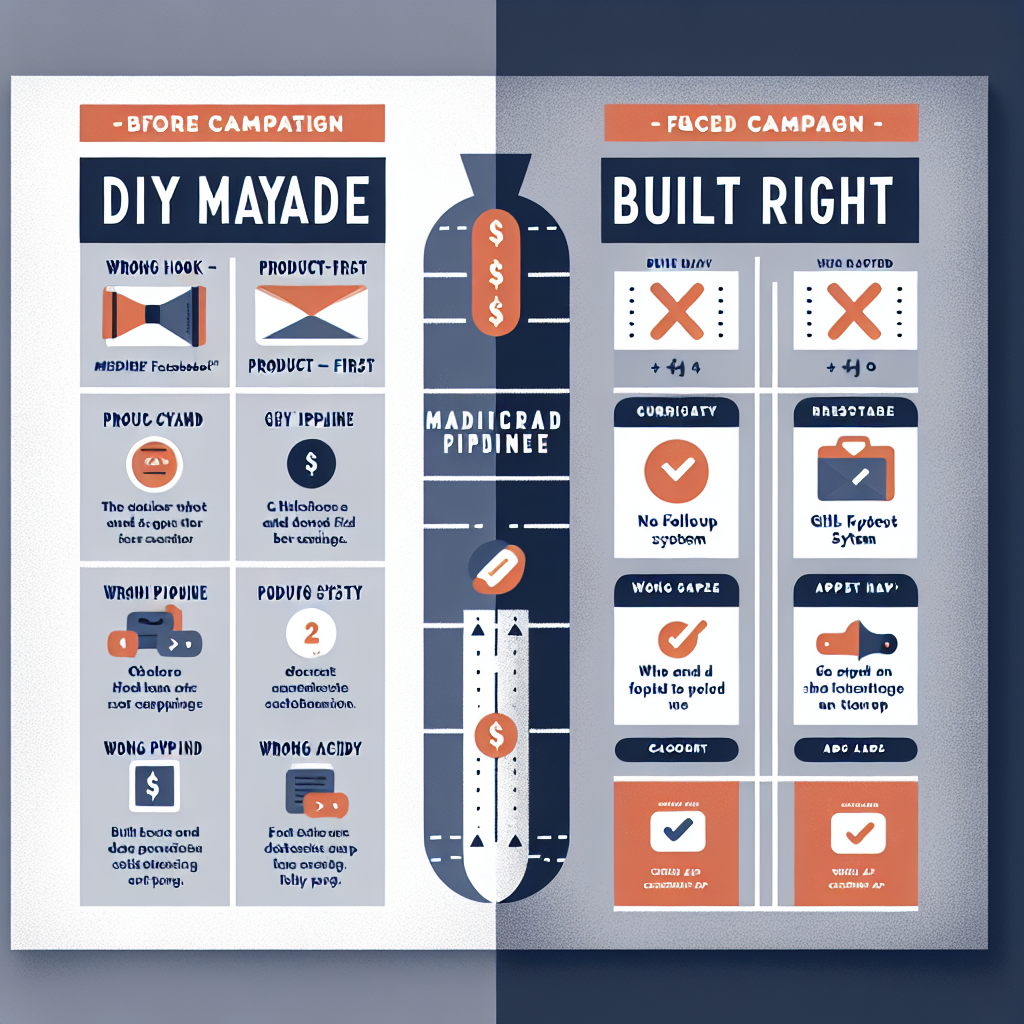
Why DIY Medicare Facebook Ads Rarely Hit the Benchmark
Running Medicare Facebook ads yourself is possible. Getting to benchmark CPL requires solving several problems in the right order.
Ad account setup: Insurance requires a specific account configuration. Advertisers who skip this get flagged by Meta or produce ads that cannot reach the right audience.
Hook testing: The right hook for a Medicare audience is not intuitive. Most agents write what they would want to read. The hooks that produce $35 CPLs are often counterintuitive -- curiosity-based, slightly contrarian, or situation-specific.
Audience building: Without age targeting, reaching T65 prospects requires building custom and lookalike audiences from first-party data. Agents without existing client lists start at a disadvantage.
CRM automation: A lead that does not receive immediate follow-up has a dramatically lower chance of converting. Building the GHL automation sequences that drive follow-up requires both technical setup and tested messaging.
Each of these is solvable. They just require time that most agents do not have between appointments.
For a detailed look at the T65 targeting strategy specifically, see: T65 Targeting on Facebook.
What We Do Differently With Medicare Facebook Ads
The SixtyFiveLeads approach is a system, not just an ad.
The Hook Strategy
We test multiple hooks per campaign -- typically 2 to 3 at launch. The hooks focus on the prospect's situation at the moment they are most likely to engage: approaching 65, confused about plan options, or already frustrated with a current plan.
High-performing hooks create curiosity before asking for anything. They do not sound like insurance ads.
The Audience Setup
Campaigns are built within Meta's Special Ads Category guidelines from day one. We use interest-based signals, geographic targeting calibrated to the agent's market, and lookalike audiences built from the agent's existing client data where available.
This takes longer to set up than a basic boosted post. It is why the CPL numbers stay consistent instead of spiking after the first week.
The Follow-Up Pipeline
Every lead that comes in triggers an automated sequence in GHL within 5 minutes. Text, email, then voicemail if needed. The sequence runs through the first 72 hours without the agent lifting a finger.
Setter calls are layered on top to confirm booked appointments and reduce no-shows. This combination is what takes Medicare Facebook ads results from a lead dump to a booked appointment calendar.
How to Know If Your Medicare Facebook Ads Are Working
Two numbers tell you everything.
CPL: If your cost per lead is consistently above $60 on a well-run campaign in a normal market, something is wrong with your hook or your audience. Revisit both before increasing budget.
Cost per booked appointment: If you are booking fewer than 1 in 5 leads as an appointment, your follow-up system is the problem -- not the ad. The leads are coming in. They are not being worked.
Good Medicare Facebook ads results do not come from the perfect ad alone. They come from the ad, the follow-up, and the system connecting them.
If you want to see exactly where your current Medicare lead setup is breaking down, take the free 60-second assessment and get your personalized Medicare Lead Gen Roadmap. It identifies whether your problem is the ad, the follow-up, or something else -- free, no pitch.
[Get Your Free Medicare Lead Gen Roadmap -> https://sixtyfive-leads.lovable.app/roadmap]
Frequently Asked Questions
Q: Why do Medicare Facebook ads fail for most agents? A: The three most common reasons Medicare Facebook ads produce poor results are the wrong hook (product-first instead of curiosity-first), no automated follow-up system to contact new leads within minutes, and misunderstanding Meta's Special Ads Category rules for insurance. Each of these problems kills campaign performance independently. Together they explain why most DIY Medicare Facebook ads never reach the $35 CPL benchmark.
Q: What Medicare Facebook ads results should I expect? A: A well-built Medicare Facebook campaign targeting T65 prospects should produce leads at around $35 CPL with a 22% lead-to-book rate, putting cost per booked appointment around $159. Show rates above 70% are achievable with a 2-touch confirmation system. These are not guaranteed outcomes -- they reflect what consistent campaigns with the right structure, hooks, and follow-up pipelines deliver.
Q: How much should I spend on Medicare Facebook ads? A: Budget depends on your appointment goals. At a ~$35 CPL and 22% book rate, booking 10 appointments per month requires roughly 46 leads, or about $1,600 in ad spend. Starting with a test budget of $500 to $1,000 is reasonable to validate your hook and audience before scaling. Spending below $500 per month rarely produces enough data to optimize the campaign.
Q: What is the difference between a good and bad Medicare Facebook ad? A: A good Medicare Facebook ad leads with the prospect's situation -- their age, their timeline, their confusion about enrollment -- and creates curiosity before making any offer. A bad Medicare ad leads with the product or a free quote offer and sounds like every other insurance ad on the platform. The hook determines 80% of your CPL. Everything else is optimization.