
T-65 Leads vs Aged Medicare Leads: Contact Rate Data
T-65 leads vs aged Medicare leads is the trade-off every Medicare agent eventually faces. One looks cheap. One looks expensive. The contact rate data flips both assumptions on their head.
The short version: aged Medicare leads run $0.25 to $5 per lead but contact at around 30%. Fresh, exclusive, SMS-verified T-65 leads run $50+ per lead but contact at 80%+. When you factor in agent time per enrollment, exclusive T-65 leads cost less per closed client. This post shows the math.
What "Aged" Actually Means in T-65 Leads vs Aged Medicare Leads
Aged Medicare leads are leads that were generated days, weeks, or months ago and resold at a discount. The original lead vendor sold them once or twice at full price. The leftovers get bundled and resold for pennies.
A 30-day aged lead is one that was generated about a month ago. A 90+ day aged lead has been sitting around for at least three months. By that point, the prospect has often already spoken to other agents, enrolled in a plan, or forgotten they ever filled out a form.
T-65 leads, on the other hand, are time-sensitive by definition. A T-65 lead is someone aging into Medicare in the next few months. Their need is immediate. Wait 90 days and the entire enrollment window may have closed.
Why Aged Medicare Leads Exist at All
Aged leads are cheaper because the urgency window has decayed. Lead vendors recoup their cost by selling fresh leads at $25 to $90 each, then reselling the leftovers at $0.25 to $5 once the urgency is gone.
For some products (auto insurance, mortgage refinance) aged leads work because the buying window is long. For Medicare, the window is short and tied to specific enrollment dates. Aged Medicare leads carry an extra discount because half the prospects already enrolled with someone else.
T-65 Leads vs Aged Medicare Leads: The Contact Rate Gap
This is the data most agents have not seen. Side-by-side contact rates make the comparison clear.
| Lead Type | Cost Per Lead | Contact Rate | Close Rate |
|---|---|---|---|
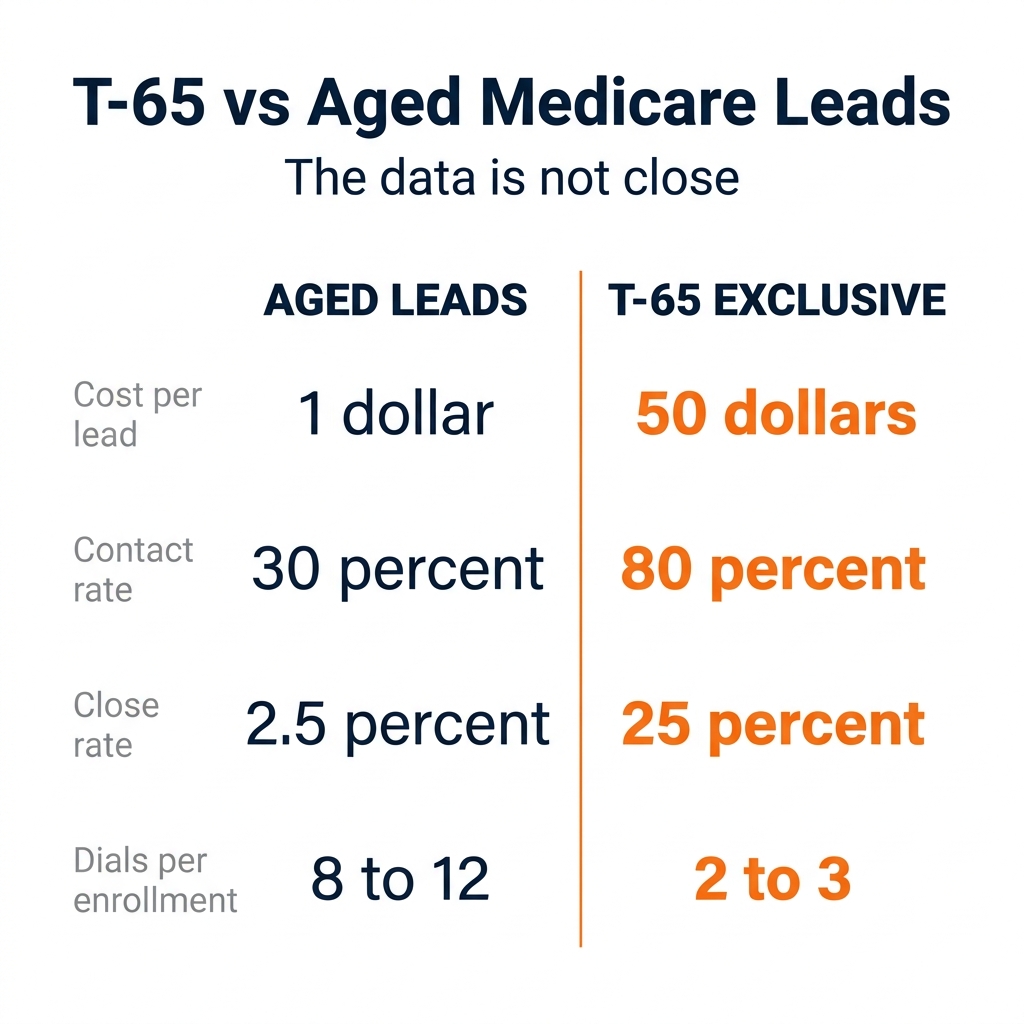
| Aged Medicare (90+ days) | $0.25 - $1 | ~30% | 1.5% - 3.5% |
| Aged Medicare (30-60 days) | $1 - $5 | 30-40% | 3% - 6% |
| Fresh PPC Medicare lead | $25 - $90 | ~55% | varies (often <15%) |
| Exclusive SMS-verified T-65 | $50+ | 80%+ | 25%+ |
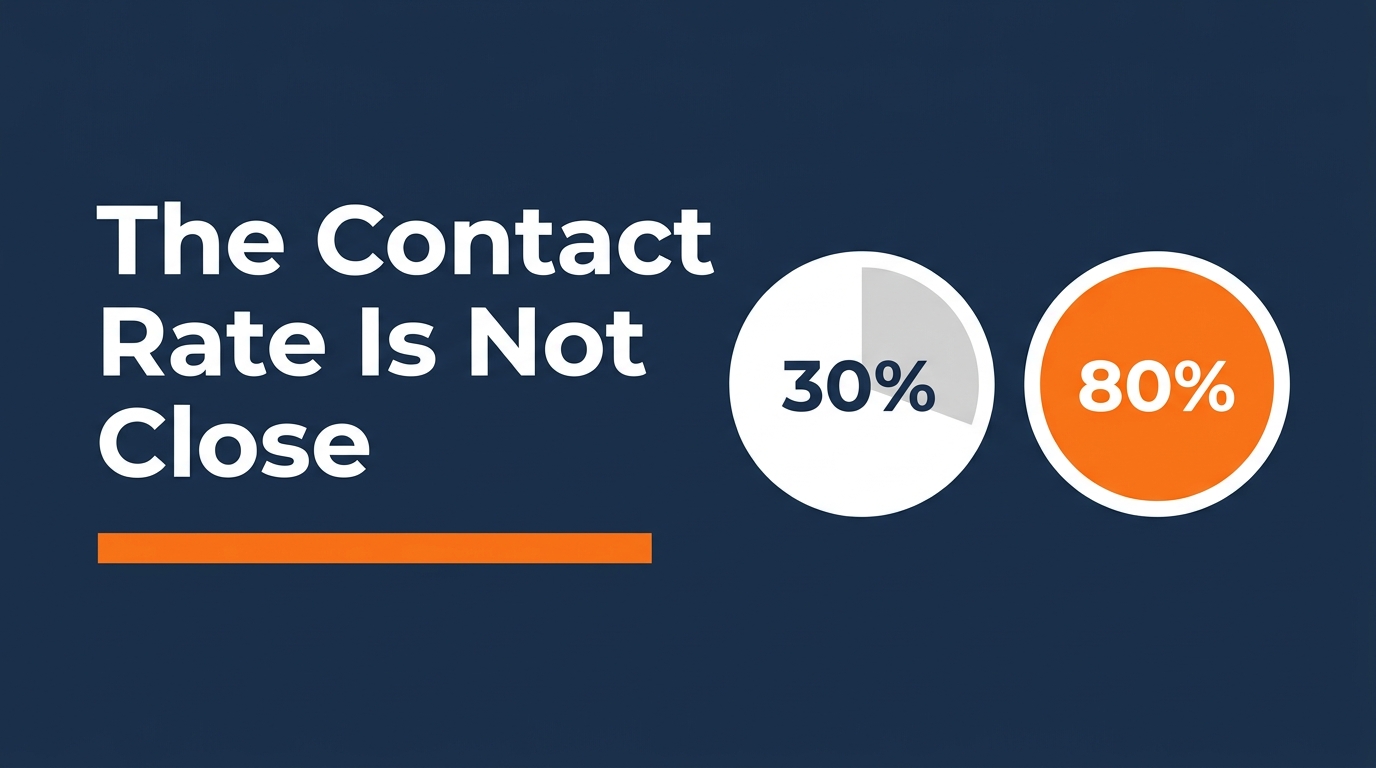
The contact rate gap is the headline number. Aged leads contact at 30%. Exclusive T-65 leads contact at 80% or more. That gap alone explains why agents who buy aged leads grind for hours to find one live conversation.
The 80% Contact Rate Math
Why do exclusive SMS-verified T-65 leads contact at 80%+? Because every single one of them replied to an SMS confirmation before the lead was delivered. They are awake. They have their phone. They are expecting a call.
Aged leads have no such verification. The prospect filled out a form 90 days ago, may have moved, may have changed numbers, may have forgotten the inquiry. Half of them never pick up because half of them are no longer reachable.
This is the entire mechanism behind T-65 lead quality. SMS confirmation forces an active opt-in inside a recent time window. The lead is live. The lead is hot. The lead is waiting.
The Hidden Cost of Aged Medicare Leads: Agent Time
Agents who buy aged Medicare leads usually focus on price per lead. Then they realize the real cost is time.
Industry data is consistent: agents working aged leads need 3 to 5 times more dial attempts per issued policy than agents working fresh leads. If you make 2 dials per enrollment on fresh leads, expect 8 to 12 dials per enrollment on aged leads. That is hours of phone time per closed client.
Run the math on 100 aged Medicare leads at $1 each:
- 100 leads × $1 = $100 spent on data
- 100 × 30% contact rate = 30 actual contacts
- 30 contacts × 2.5% close rate (mid of 1.5-3.5%) = ~0.75 enrollment
To get 1 enrollment, you need ~135 aged leads. To get 6 enrollments (a meaningful month), you need ~800 aged leads. That is 240 contacts. That is 800-1200 actual dial attempts. At 3 minutes per dial, that is 40-60 hours of phone time per month for 6 enrollments.
Compare to 100 SMS-verified exclusive T-65 leads:
- 100 leads × $50 = $5,000 spent on data
- 100 × 80% contact = 80 actual contacts
- 80 × 25% book × 75% show × 40% close = ~6 enrollments
Same 6 enrollments. Roughly 100 conversations vs 240 conversations. Roughly $833 per enrollment vs $134 per enrollment on aged leads, but vastly less agent time and a much cleaner client base.
The aged-lead math looks cheaper on paper until you price agent time at even $50 an hour. Then exclusive T-65 leads win on every metric except raw dollars per lead.
When Aged Medicare Leads Actually Make Sense
Aged leads are not always wrong. They are wrong for most agents in most situations. There are two narrow cases where aged Medicare leads can work.
Case 1: Massive call center capacity. If you have 5+ setters running predictive dialers and burning through volume, aged leads can fill a feed. The bad contact rate stops mattering when you have 10,000 dial attempts per day on tap.
Case 2: Specific OEP or SEP plays. During Medicare Open Enrollment Period (Jan 1 - Mar 31) or Special Enrollment Period triggers, an aged 60-day lead might still be in window. The window matters more than the freshness for those specific months.
For everything else — solo agents, small teams, year-round pipeline — aged Medicare leads are a tax on agent time. The math does not work out once you price an hour of your day at anything above zero.
What Most Aged Lead Vendors Do Not Tell You
Aged Medicare leads are sold to multiple buyers, often dozens of times. By the time you call your $1 lead, that prospect has been called by 6 other agents that week and 20 other agents that quarter. They are tired. They are screening calls. They are not converting.
This is also why aged-lead close rates collapse from 6% (30-60 days) to 1.5% (90+ days). The prospect has been pitched to death. Nothing in your script can fix that.
T-65 Leads vs Aged Medicare Leads: The Bottom Line
The decision comes down to what you optimize for. If you optimize for cost per lead, aged leads win every time. If you optimize for cost per enrollment plus agent time, exclusive T-65 leads win every time.
For solo agents and small teams, agent time is the most expensive resource on the books. A real Medicare lead generation system needs to convert hours into closed clients, not into dial attempts. See the full Medicare lead generation playbook here. Or read our breakdown of what hand-raised T-65 leads actually are.
The agents who scale fastest pick a quality lead source early and stop bouncing between aged-lead vendors. The contact rate data tells you exactly why.
Want to know exactly where your Medicare lead gen is breaking down?
Take the free 60-second assessment and get your personalized Medicare Lead Gen Roadmap. It benchmarks your current pipeline setup, your contact rate, and your cost per enrollment. Free, no pitch.
Get Your Free Medicare Lead Gen Roadmap →
Or if you are ready to talk now, book a free 20-minute strategy call here. No pitch. Just a look at your market and what consistent leads could look like.
Frequently Asked Questions
Q: What is the contact rate on aged Medicare leads?
A: Aged Medicare leads contact at around 30%. The contact rate drops further as leads age beyond 60-90 days. By comparison, T-65 leads vs aged Medicare leads is not a close fight on contact rate — exclusive SMS-verified T-65 leads contact at 80%+ because the prospect actively confirmed via text within the last 24 hours.
Q: Are aged Medicare leads worth buying?
A: Aged Medicare leads make sense for high-volume call centers running predictive dialers or for specific OEP and SEP windows. For solo agents and small teams optimizing for agent time, aged Medicare lead pricing looks cheap on the surface but costs more per enrollment when you factor in 3-5x dial attempts and lower close rates.
Q: How do T-65 leads compare to aged Medicare leads?
A: T-65 leads are time-sensitive Medicare-eligible prospects in their 7-month IEP window. Aged Medicare leads are recycled data sold at a discount because the original urgency is gone. T-65 leads have higher contact rates (80%+ for SMS-verified vs 30% aged), higher close rates (25%+ vs 1.5-6%), and shorter sales cycles, but cost 10-50x more per lead.
Q: What is the close rate on 90-day aged Medicare leads?
A: Experienced agents close 90+ day aged Medicare leads at 1.5% to 3.5%. 30-60 day aged leads close at 3% to 6%. The drop reflects how many prospects have already enrolled or been pitched by other agents during the aging window. Close rates for exclusive T-65 leads sit at 25%+ because the lead is fresh, exclusive, and pre-qualified.